• Red Hoagland Hyundai

    Winter Haven, Florida

Blog

Palisade Exterior 1.91:1 marketing

Hyundai Palisade Buying Guide for Winter Haven Families: V6 or Hybrid

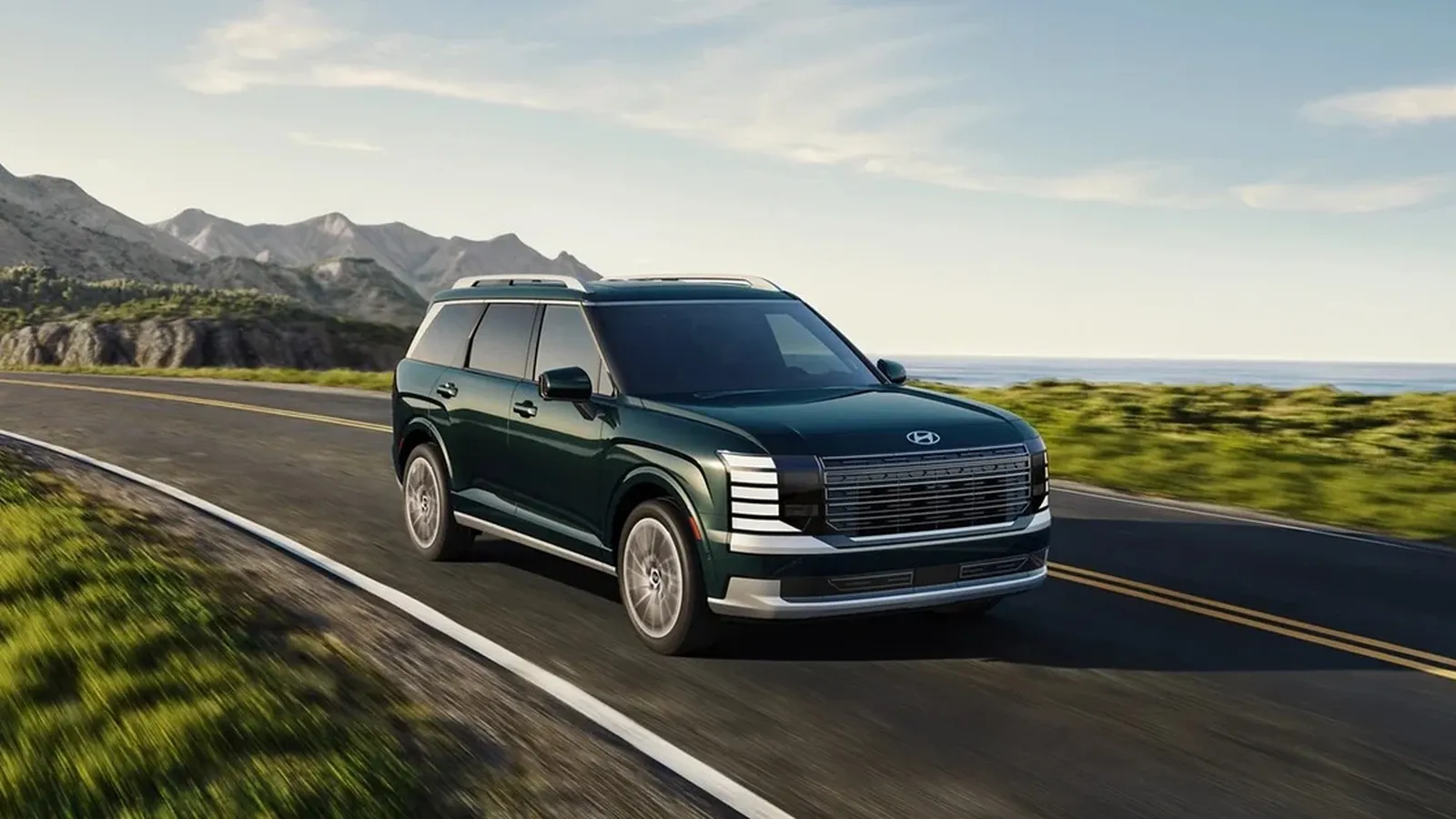
By Red Hoagland Hyundai Team · Published October 22, 2026 If your family has outgrown a smaller SUV, the Hyundai Palisade is probably on your list. It is a midsize SUV with three real rows and room for a full carpool. For families in Winter Haven, the big choice is no longer just which trim to pick. It is whether to go with the proven V6 or the newer hybrid. This guide breaks down both so you can walk into the showroom knowing what you want. Why the Hyundai Palisade Fits Polk County Family Life Life in Polk County means a lot of short trips with a full car. School drop off, practice across town, a run to the grocery store and then a weekend trip to the coast. A three row SUV has to handle all of it without feeling like a bus in a parking lot. The Palisade is built around that kind of week. Hyundai says the 2027 Palisade offers seating for 7 or 8, depending on whether you choose second row captain's chairs or a bench. A second row bench that fits up to 8 passengers comes standard. If you want easier access to the third row, captain's chairs open a walkway down the middle. Here is what most local families tell us they care about: Room for everyone. Adults should not dread the third row on a short trip. Space for gear. Strollers, coolers, sports bags and beach chairs all need a home. Cool cabin comfort. Florida heat makes strong air conditioning and ventilated seats more than a luxury. Easy ownership. A long warranty and simple service matter when the SUV is the family's main vehicle. The Palisade checks each of these boxes in different ways depending on the trim, so it helps to start with the engine choice first. V6 or Hybrid: The First Decision Hyundai now offers two very different powertrains in the Palisade. Neither is wrong. They suit different drivers. The 3.5 liter V6 The 2027 Palisade with the gas engine uses a 3.5 liter V6 rated at 287 horsepower, paired with an 8-speed automatic transmission. It is smooth and familiar, and it is the right pick if towing is part of your plans. Hyundai lists maximum trailer weight for the 2027 Palisade V6 at 5,000 lbs. with trailer brakes. That number matters if you pull a small boat to the Chain of Lakes, a pop up camper or a utility trailer. Front wheel drive is standard on most V6 trims, and HTRAC all wheel drive is available. The turbo hybrid The 2026 Palisade Hybrid pairs a turbocharged four cylinder with an electric motor. Hyundai rates the combined system at 329 horsepower. That is more power than the V6, delivered in a way that feels strong when you merge onto the highway. The other side of the hybrid is fuel economy. Hyundai lists the 2026 Palisade Hybrid Blue SEL and SEL Premium with front wheel drive at an EPA estimated 33 city, 35 highway and 34 combined MPG. For a family that spends most of its time in stop and go traffic, that adds up over a year of driving. The tradeoff is towing. Hyundai lists the 2026 Palisade Hybrid at up to 4,000 lbs. with trailer brakes, lower than the V6. A quick way to decide Your situation Lean toward You tow a boat or camper often V6 Most driving is around town Hybrid You want the most power Hybrid You want the simplest, most familiar setup V6 You plan long highway road trips Either, test drive both The surest way to settle it is to drive both back to back on the same day. Many shoppers who planned on one end up choosing the other once they feel the difference. Space Inside: Seats, Rows and Cargo A three row SUV lives or dies by how usable that third row is and how much room is left behind it. The Palisade does well on both counts. Hyundai lists cargo capacity for the 2027 Palisade at 86.7 cubic feet behind the front seats, with useful space left behind the second and third rows. In plain terms: All three rows up: enough for a grocery run or a few carry on bags while every seat is full. Third row folded: room for a stroller, a cooler and a weekend's worth of bags. Second and third rows folded: space for flat pack furniture or a load of moving boxes. Before you buy, bring the things you haul most often. Put the car seats in. Check whether your stroller fits behind the third row. Have your tallest teenager climb into the back. Ten minutes of real world testing tells you more than any spec sheet. Choosing a Palisade Trim The 2027 Palisade gas lineup runs from SE to SEL, SEL Premium, Limited, XRT PRO and Calligraphy. The hybrid comes in SEL, SEL Premium, Limited and Calligraphy versions. Features vary by trim, so treat the notes below as a general guide and confirm details on the vehicle you are looking at. SE and SEL These are the value focused trims. You still get three rows, modern safety technology and the full Hyundai warranty. The SEL adds more comfort and convenience features. If you mostly need space and reliability, start here. SEL Premium and Limited These step up into more upscale materials and more available technology. Look here if you want features like ventilated seats, which are worth a lot during a Central Florida summer, and a quieter, more polished cabin. XRT PRO The XRT PRO is the rugged option. Hyundai lists HTRAC all wheel drive as standard on this trim, along with an electronic limited slip differential and all terrain tires. It makes sense if you drive on dirt roads, grass lots or sandy boat ramps. Calligraphy Calligraphy is the top trim, aimed at shoppers who want premium materials and the most available features. It is offered with both the V6 and the hybrid. Comfort, Technology and Safety on Your Test Drive A spec sheet only tells you so much. The test drive is where you find out whether a Palisade fits the way your family actually lives. Plan to spend at least half an hour with it, and try to drive the roads you use every day. Comfort in Florida heat Hot weather changes how you judge an SUV. A cabin that feels fine on a test drive in January can feel very different in July. When you look at a Palisade, pay attention to a few things: Rear air conditioning. Sit in the third row with the engine running and feel the airflow. Kids in the back notice right away. Ventilated seats. Available on upper trims, they help a lot after the SUV has been parked in the sun. Window shades and glass. Ask which trims offer rear sunshades or tinted glass. Remote start features. Being able to cool the cabin before you get in is a real quality of life feature here. The hybrid has one more advantage in traffic. Because the electric motor can help at low speeds, the engine does not need to work as hard in stop and go driving, which is where many Polk County miles happen. Technology you will use every day Modern family SUVs carry a lot of screens and settings. Some of it you will love and some of it you will never touch. During your drive, focus on the features you will use daily. Pair your phone and see how quickly it connects. Try the navigation or your phone's map app on the main screen. Ask the product specialist to show you how to adjust the climate controls for each row without digging through menus. Count the charging ports, too, and note where they are. In a three row SUV, the kids in the back want power just as much as the driver does. A cabin with ports in every row saves a lot of arguments on longer trips. Safety and driver assistance Hyundai equips the Palisade with a suite of driver assistance technology, and the exact list depends on the trim. Ask to see how the lane keeping, blind spot and smart cruise features behave on a real road. Some drivers like a lot of help, while others prefer a lighter touch. Most systems can be adjusted, so learn where those settings live before you leave the lot. Parking is worth testing as well. A big SUV in a tight Winter Haven parking lot can feel stressful. Try the available parking cameras and sensors in a crowded spot so you know how much they help. Palisade or Santa Fe? Some families come in for a Palisade and realize a smaller three row SUV would do the job. Hyundai's Santa Fe also has three rows, but the Palisade gives you more cargo room behind the third row. Hyundai's spec sheets show noticeably less space behind the third row of the 2027 Santa Fe than in the 2027 Palisade. If you fill every seat often or carry adults in the back, the Palisade is the safer bet. If the third row is mostly for occasional use, sit in a Santa Fe too before you decide. Warranty and Ownership Costs to Think About A family SUV usually becomes a long term vehicle, so ownership matters as much as the purchase. Hyundai lists the 2027 Palisade with a 5 year or 60,000 mile New Vehicle Limited Warranty and a 10 year or 100,000 mile Powertrain Limited Warranty. The powertrain coverage applies to the original owner. A few other things to think about before you buy: Fuel. If you drive a lot of city miles, the hybrid's mileage rating may make a real difference over several years. Tires. Larger wheels on upper trims often mean pricier replacement tires. Ask about tire sizes on the trim you like. Service. Plan on regular maintenance at a Hyundai service department that knows both the V6 and hybrid systems. You can learn more on the Red Hoagland Hyundai service page. Financing. If you want to understand your options before you visit, the finance center lets you start the process online. If a new Palisade is more than you planned to spend, a used or certified Palisade can be a smart middle ground. Browse the used inventory to see what is available. See the Palisade in Winter Haven The easiest way to choose between the V6 and hybrid is to drive both. Bring the family, bring the car seats and spend some time in each row. Check the new Palisade inventory online first, then schedule a test drive at Red Hoagland Hyundai at 6375 Cypress Gardens Blvd in Winter Haven. Our team can walk you through each trim and help you find the one that fits your family. Final Thoughts on the Hyundai Palisade The Hyundai Palisade gives Winter Haven families two strong choices. The V6 is the pick if you tow often or want a familiar setup. The hybrid offers more power and much better fuel economy for daily driving. Both give you three usable rows, a lot of cargo room and long warranty coverage. Decide which matters more to your household, test both, and the right Palisade will become clear quickly. You can learn more about our store on the Red Hoagland Hyundai home page. Frequently Asked Questions Does the Hyundai Palisade come as a hybrid? Yes. Hyundai offers the 2026 Palisade Hybrid with a turbocharged four cylinder and an electric motor. Hyundai rates the combined system at 329 horsepower. It is offered in SEL, SEL Premium, Limited and Calligraphy versions. How many people can the Palisade seat? Hyundai lists the 2027 Palisade with seating for 7 or 8. A second row bench for up to 8 passengers comes standard, and second row captain's chairs drop seating to 7 while making the third row easier to reach. Can the Palisade tow a boat? Many small boats, yes. Hyundai lists the 2027 Palisade V6 at up to 5,000 lbs. with trailer brakes and the 2026 Palisade Hybrid at up to 4,000 lbs. Always check your trailer's loaded weight and the owner's manual before you tow. Is the Palisade hybrid worth it for Winter Haven driving? It can be if most of your driving is around town. Hyundai lists the 2026 Palisade Hybrid Blue SEL and SEL Premium FWD at 34 combined MPG. A back to back test drive with the V6 is the easiest way to decide. Should I buy a new or used Palisade? It depends on your budget and how long you plan to keep it. A new Palisade gives you the full factory warranty and your choice of V6 or hybrid. A certified used Palisade can give you much of the same space with remaining factory coverage. Compare both on our website before you visit. Sources (as of October 20, 2026) 2027 Palisade | Three-Row Midsize SUV | Hyundai USA (as of October 20, 2026) 2027 Palisade Hybrid | Three-Row Midsize SUV | Hyundai USA (as of October 20, 2026) Hyundai Warranty Coverage | America's Best | Hyundai USA (as of October 20, 2026) All Prices excludes Dealer Service Fee $885, Electronic Filing Fee $291

Read More
Hyundai Kona versus Chevrolet Trax Compared

Hyundai Kona versus Chevrolet Trax Compared

The Hyundai Kona versus Chevrolet Trax question usually comes down to a practical choice: Do you want a small SUV that feels more polished and available with more capability, or one that keeps the purchase straightforward and budget-focused? Both are smart options for Winter Haven, Davenport, and Polk County drivers who want easy parking, a useful cargo area, and a comfortable daily commute. The better fit depends on how you drive, who rides with you, and which features matter after the new-car excitement wears off. Hyundai Kona versus Chevrolet Trax at a glance The Hyundai Kona and Chevrolet Trax are subcompact SUVs with room for five, modern safety technology, and a city-friendly footprint. Neither is trying to replace a three-row family SUV. Instead, they make sense for first-time buyers, downsizing households, college-bound drivers, and families looking for an efficient second vehicle. The Kona generally offers a wider range of trims, powertrains, and available features. It can be a value-minded commuter, a sportier turbocharged SUV, an all-wheel-drive vehicle, or an electric SUV in the form of the Kona Electric. The Trax takes a simpler route. Its lineup centers on a turbocharged gas engine, front-wheel drive, and a roomy-for-its-size cabin. For shoppers who prioritize a lower starting price and uncomplicated transportation, the Trax deserves a close look. For those who want more choices in performance, traction, technology, and ownership coverage, the Kona has a stronger case. Size and passenger space At first glance, these SUVs occupy nearly the same parking space. That matters when you are slipping into a crowded spot near downtown Winter Haven, pulling into a school pickup line, or navigating a busy grocery-store lot. The Chevrolet Trax has a slightly more open-feeling rear seat, with generous rear legroom for its class. Adults can ride back there more comfortably than they may expect from a subcompact SUV. The Kona is also practical for four adults and can carry five in a pinch, although its rear-seat space is a little tighter on paper. Cargo space is close, but the difference behind the second row tells part of the story. The Trax offers about 25.6 cubic feet of cargo room behind its rear seats, while the Kona offers about 25.5 cubic feet. Fold the seats down, however, and the Kona provides more maximum cargo volume, at roughly 63.7 cubic feet compared with approximately 54.1 cubic feet in the Trax. That means the Trax is well suited to weekly groceries, a stroller, beach bags, or a couple of carry-on suitcases. The Kona has more flexibility when you are carrying larger boxes, moving a dorm-room load, or bringing home supplies for a weekend project. What the numbers feel like day to day If rear-seat comfort for teens or adult passengers is your regular concern, sit in both vehicles before deciding. If you more often carry gear with the rear seats folded, the Kona’s larger maximum cargo area may prove more useful. This is a good example of why a quick test drive tells more than a spec sheet alone. Performance and Florida driving The Chevrolet Trax uses a 1.2-liter turbocharged three-cylinder engine with 137 horsepower and a six-speed automatic transmission. It is built for relaxed daily driving, not quick acceleration. Around town, it is easy to maneuver and generally delivers the calm, efficient experience many buyers want. The Hyundai Kona starts with a 2.0-liter four-cylinder engine producing 147 horsepower. Drivers who prefer stronger response can consider trims with a 1.6-liter turbocharged engine rated at 190 horsepower. That added power is especially noticeable when merging onto I-4, passing slower traffic on U.S. 27, or traveling with a full cabin and cargo area. The Kona also gives shoppers the option of all-wheel drive on select gas models. Front-wheel drive is sufficient for many Central Florida households, where snow and steep terrain are not part of the equation. Still, all-wheel drive can add confidence in heavy rain and for drivers who make frequent trips outside the region. The Trax is front-wheel drive only. Fuel economy remains competitive for both. A front-wheel-drive Kona with the standard engine earns EPA estimates around 29 mpg city and 34 mpg highway, depending on model year and configuration. The Trax is rated around 28 mpg city and 32 mpg highway. Actual results will vary with traffic, air-conditioning use, driving style, and load, but neither vehicle should feel costly at the pump compared with a larger SUV. Features and technology The Kona feels more customizable because Hyundai offers a broader trim range. Depending on the model, shoppers may find available features such as a larger touchscreen, digital instrument display, wireless smartphone integration, heated and ventilated front seats, a power liftgate, premium audio, and a sunroof. The Trax is not bare-bones, especially in its upper trims. It can offer a large infotainment screen, wireless Apple CarPlay and Android Auto, heated seats, and useful driver-assistance technology. Its cabin layout is straightforward, and many drivers will appreciate controls that are easy to learn without a long adjustment period. The key difference is not that one SUV has technology and the other does not. It is how far each one can be equipped. The Kona gives buyers more room to move upmarket without stepping into a larger vehicle. The Trax keeps its mission focused on providing popular features at a more accessible price point. Safety equipment deserves a trim-by-trim check Both vehicles offer core driver-assistance features, but standard and available equipment can change by trim and model year. Before purchasing, confirm the exact vehicle has the features you want, whether that is forward collision avoidance, lane-keeping assistance, blind-spot monitoring, rear cross-traffic alert, or adaptive cruise control. A transparent walkaround should include more than screen size and wheel design. Ask to see how the safety alerts work, how the rear camera looks in daylight, and whether the seating position gives you a clear view of the road. Value, warranty, and long-term ownership The Trax often has the advantage when comparing starting MSRP. For a shopper who wants the lowest new-vehicle payment possible, that can be meaningful. Lower purchase price can also leave room in the budget for insurance, fuel, accessories, or a larger down payment. The Kona’s value story is broader. Hyundai backs new vehicles with a 5-year/60,000-mile limited warranty and a 10-year/100,000-mile powertrain limited warranty for the original owner. Chevrolet’s new-vehicle coverage includes a 3-year/36,000-mile bumper-to-bumper limited warranty and a 5-year/60,000-mile powertrain limited warranty. Warranty terms have conditions, so reviewing the current warranty booklet before purchase is always wise. The Kona may cost more at certain trim levels, but it can return value through its stronger available engine, all-wheel-drive option, longer original-owner powertrain coverage, and more upscale available equipment. The Trax can be the better value if you are choosing a practical base or mid-level model and do not need those extras. Financing changes the comparison, too. A lower-priced vehicle does not automatically mean the lower monthly payment once rates, term length, trade value, and down payment are considered. Families comparing payments should review the full out-the-door figure and avoid choosing solely by the monthly number. Which small SUV fits your household? Choose the Chevrolet Trax if your priorities are a lower entry price, comfortable rear-seat room, simple controls, and an efficient front-wheel-drive commuter. It is a sensible choice for drivers who want a new SUV without stretching their budget for performance upgrades or premium options. Choose the Hyundai Kona if you want more variety. It is the better match for shoppers who value available all-wheel drive, quicker turbocharged performance, a larger maximum cargo area, more feature choices, or Hyundai’s longer original-owner powertrain warranty. It is also worth considering if you are EV-curious, since the Kona Electric offers a familiar SUV shape without gasoline stops. For some households, a Hyundai Certified Pre-Owned Kona may be the sweet spot. Eligible Hyundai Certified Pre-Owned vehicles undergo a 173-point inspection and can offer added confidence for buyers balancing vehicle age, features, and budget. A late-model used Kona may make higher-level technology or a preferred trim attainable without the price of a new one. The right answer is not always the SUV with the biggest discount or the longest feature list. It is the one that fits your normal Tuesday morning, your weekend plans, and your comfort level with the payment. Compare the exact trims, take the route you drive most often, and bring the people who will actually use the back seat. When you are ready, browse new and used options, discuss financing that fits your plans, and schedule a test drive with a team that treats your decision like a family decision. Frequently Asked Questions Does the Hyundai Kona offer all-wheel drive in Florida? Yes. Hyundai offers HTRAC all-wheel drive on Kona gas models. Most Winter Haven and Lakeland drivers do fine with front-wheel drive, but all-wheel drive can add traction in heavy summer downpours and on unpaved roads. Ask Red Hoagland Hyundai which Kona trims in stock have it. Is the Kona big enough for a small family? For many small families, yes. The current Kona has more rear-seat and cargo room than earlier versions, and folding the rear seats opens a large cargo area. If you regularly carry three across in back or lots of gear, compare it with a Tucson. Bring your car seats to Red Hoagland Hyundai to check the fit. Is there an electric version of the Kona? Yes. The Kona Electric shares the Kona's small SUV shape and adds all-electric driving, which can suit commuters who can charge at home. Check the EPA range of the exact trim and your daily miles. Red Hoagland Hyundai in Winter Haven can show you current Kona Electric availability and explain home charging. What maintenance does Hyundai include on a new Kona? Original owners of a new Kona get Hyundai Complimentary Maintenance for 3 years or 36,000 miles, covering scheduled oil and filter changes, tire rotations and multi-point inspections. The Red Hoagland Hyundai service department in Winter Haven can handle those visits for drivers across Polk County.
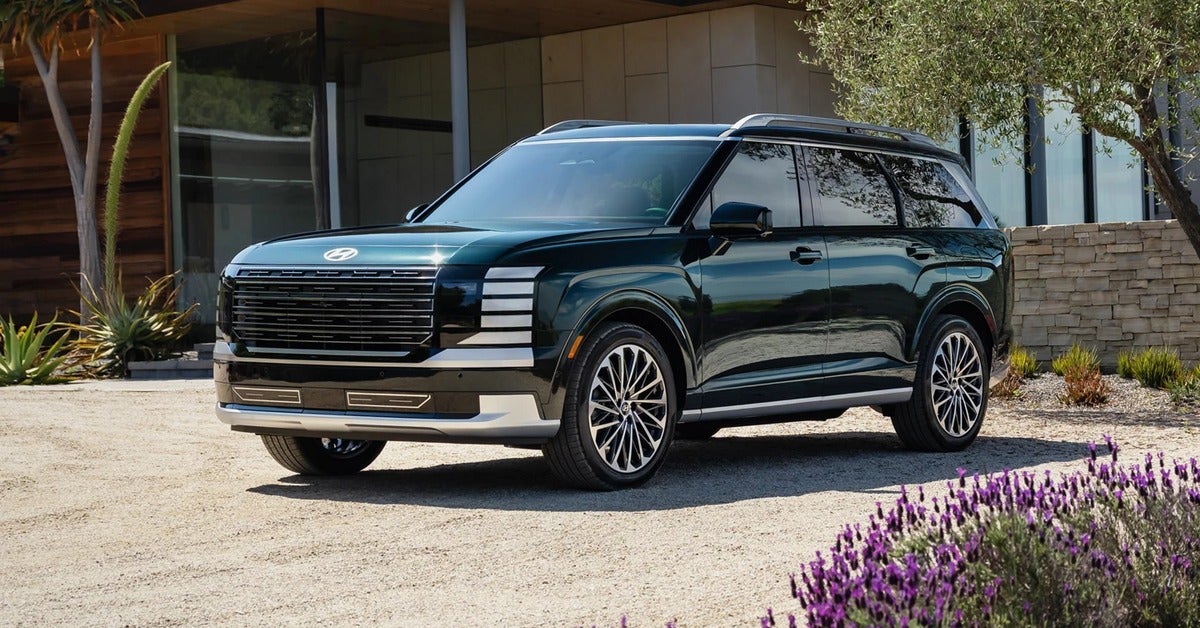
Hyundai Palisade: A Family SUV Worth Comparing

Hyundai Palisade: A Family SUV Worth Comparing

The school pickup line, a weekend at Legoland, a drive to Tampa, and a full grocery run can expose the limits of a smaller SUV quickly. The Hyundai Palisade is built for families who need real three-row space without moving to a minivan or a full-size truck-based SUV. For shoppers in Winter Haven, Davenport, Lakeland, and across Polk County, it is a strong option when comfort, passenger room, and everyday value all matter. The Palisade is Hyundai's largest gas-powered SUV, seating up to eight passengers depending on configuration. It brings a more upscale cabin than many buyers expect at its price point, along with available all-wheel drive, helpful driver-assistance technology, and the kind of features that make long Florida drives easier. Still, the right choice depends on how you use the third row, how much you tow, and whether a new or certified pre-owned model makes the most sense for your budget. What Makes the Hyundai Palisade Different? The Hyundai Palisade occupies a useful middle ground. It is larger and roomier than the Santa Fe, but it is generally easier to park and live with than many full-size SUVs. Its focus is not off-road performance or maximum towing. It is a family-first vehicle designed to make everyday trips feel less cramped and road trips feel less tiring. A three-row SUV can technically have seven or eight seats and still leave third-row passengers feeling like an afterthought. The Palisade stands out because adults and older kids can use the third row more comfortably than they can in many midsize competitors. Second-row captain's chairs, available on certain trims, create an easy walkway to the back and give passengers a more relaxed seating position. A second-row bench is the better fit if seating for eight is the priority. Behind the third row, cargo room is practical for a stroller, a few bags, or the basics for a weekend away. Folding the rear seats opens substantially more room for larger purchases, sports equipment, or luggage. Families who regularly carry six or seven people plus a lot of cargo should still test the space in person. Cargo needs vary far more than spec sheets suggest. Hyundai Palisade Performance and Towing Gas Palisade models use a 3.5-liter V6 engine paired with an automatic transmission, while the Palisade Hybrid uses a turbocharged 2.5-liter hybrid powertrain. The result is smooth, predictable acceleration rather than a sporty or aggressive feel. It is well suited to merging onto Interstate 4, passing on Highway 27, and carrying a full cabin without seeming strained. Front-wheel drive is available on many configurations, while Hyundai's HTRAC all-wheel-drive system is offered for buyers who want added confidence in heavy rain or on trips beyond Central Florida. All-wheel drive is not essential for every household here, and it adds cost and some mechanical complexity. For drivers who stay on paved roads and prioritize the lowest possible ownership cost, front-wheel drive can be the sensible choice. Properly equipped Palisade models can tow up to 5,000 pounds. That can cover a small boat, utility trailer, or a modest camper. Towing capacity should never be the only number considered, though. Trailer weight, passengers, cargo, hitch equipment, and the vehicle's specific configuration all affect what is appropriate. If towing is part of your plan, confirm the rating and equipment on the exact Palisade you are considering before purchase. Fuel economy is reasonable for a large V6 three-row SUV, but it will not match a compact SUV or a hybrid. Buyers with a long daily commute may want to compare total fuel costs against the Palisade Hybrid, the Santa Fe Hybrid, or an electric model such as the IONIQ 5. Buyers who need a spacious third row, however, may find the Palisade's extra room is worth that trade-off. A Cabin Designed for Long Family Days The Palisade's appeal is most obvious from the driver's seat and second row. Depending on trim and model year, features may include heated and ventilated seating, a large touchscreen, multiple USB ports, a premium audio system, a head-up display, and a surround-view monitor. Higher trims add a noticeably more luxurious atmosphere, with upgraded materials and convenience features that can make a daily commute feel calmer. Technology is useful only when it is easy to use. The Palisade's controls are generally laid out with family driving in mind, combining screen-based functions with physical buttons for common adjustments. That matters when you need to change the air conditioning at a stoplight, not hunt through menus while everyone in the cabin has an opinion. For parents, available features such as rear occupant reminders, multiple charging options, and driver-assistance systems can make a meaningful difference. They are aids, not replacements for an attentive driver, but they can reduce fatigue on longer trips. Standard and available safety features can vary by model year and trim, so compare the actual window sticker or vehicle equipment list rather than assuming every Palisade has the same setup. Palisade vs. Santa Fe: Which Size Fits Your Family? The most common Hyundai comparison is the Palisade versus the Santa Fe. The Santa Fe is the better choice for many households that want a versatile SUV but do not regularly use a third row. It is easier to maneuver, usually costs less, and can be more efficient depending on the powertrain. Choose the Palisade when the third row will be used often, when teenagers or adult relatives will ride in back, or when you want more shoulder room and cargo flexibility for trips. Choose the Santa Fe when the third row is occasional at most and a more compact footprint matters every day. The difference is not just about family size. A family of four that carpools, takes frequent road trips, or brings grandparents along may benefit more from a Palisade than a family of six that rarely travels together. Sitting in both vehicles with car seats, booster seats, or the people who will actually use them is the most honest way to decide. New or Certified Pre-Owned Hyundai Palisade? A new Palisade gives you access to the newest styling, current technology, full warranty coverage, and the ability to choose your preferred trim and color. It can be especially appealing when current incentives or financing programs make the monthly payment competitive. A Hyundai Certified Pre-Owned Palisade can be a smart alternative for value-focused buyers. Eligible Hyundai CPO vehicles go through a 173-point inspection and include manufacturer-backed benefits that add confidence beyond a typical used SUV purchase. Exact coverage terms and vehicle eligibility should be reviewed carefully, but the program can be a reassuring path for families who want newer features at a lower purchase price. The best decision depends on the gap between new and CPO pricing, available financing terms, mileage, condition, and how long you expect to keep the vehicle. A lower sale price does not always mean a lower total cost if loan terms, maintenance needs, or warranty coverage differ. Asking for clear numbers on the vehicle price, trade value, financing, and estimated ownership costs helps you compare without surprises. Questions to Ask Before You Choose a Palisade Before selecting a trim, think about the details that shape daily ownership. Will you use the third row weekly or only for guests? Do you prefer the extra capacity of a bench seat or the convenience of captain's chairs? Are you towing, parking in a tight garage, or carrying rear-facing child seats? It is also worth asking which features are standard on the particular vehicle in front of you. Model-year updates can change screens, safety equipment, wheel sizes, and available packages. A test drive should include more than a quick loop around the block. Check third-row access, fold the seats, try the visibility from the driver's seat, and see how comfortably everyone fits. Routine service matters with any family SUV. Following Hyundai's maintenance schedule, checking tires regularly, and addressing warning lights early can help protect long-term reliability. Factory-trained technicians can also help identify the correct maintenance needs for your Palisade's model year and mileage. A family vehicle should make room for real life, not ask your family to adapt around it. Whether you are comparing a new Hyundai Palisade with a certified pre-owned option or deciding between the Palisade and Santa Fe, take the time to test the seats your family will use and review the numbers at your own pace. When you are ready, browse available new and used inventory, explore financing options, or schedule service with a team that understands Central Florida families. Frequently Asked Questions Is there a hybrid Palisade? Yes. Hyundai now offers the Palisade Hybrid, which pairs a turbocharged engine with electric motors for better efficiency than the V6 while keeping three rows of seating. It suits Polk County families who log a lot of highway miles. Ask Red Hoagland Hyundai in Winter Haven to compare both versions on a test drive. Can the Palisade tow a boat to Lake Howard or Lake Hamilton? Properly equipped Palisade models can tow a small boat or utility trailer, but the exact rating depends on the powertrain and equipment. Confirm the rating for the specific Palisade, add up the trailer and cargo weight, and use the correct hitch. The Red Hoagland Hyundai team can check the specs for you. Does the Palisade come with all-wheel drive? Hyundai's HTRAC all-wheel drive is available on the Palisade, and front-wheel drive is offered on many trims. Front-wheel drive works well for most Winter Haven and Lakeland driving, while all-wheel drive adds traction in heavy rain. Drive both at Red Hoagland Hyundai to decide. Palisade or Santa Fe for a family in Polk County? Choose the Palisade if the third row will be used often by older kids or adults. Choose the Santa Fe if the third row is occasional and an easier-to-park size matters more. Both offer hybrid versions. Bring the family and car seats to Red Hoagland Hyundai to try both back to back.

Can I Trade In a Car With a Loan? What to Know

Can I Trade In a Car With a Loan? What to Know

That monthly payment on your current vehicle does not prevent you from shopping for something that fits your life better. Whether you need more room for a growing family, are considering a Hyundai Tucson or Santa Fe, or simply want to lower your payment, the answer to “can I trade in a car with a loan?” is yes. The key is understanding what happens to the remaining loan balance and whether you have equity in the vehicle. For Central Florida drivers, a trade-in with an active loan is a routine transaction. It can be straightforward, but the numbers matter. A transparent appraisal and a clear review of your payoff amount help you decide whether trading now makes sense or whether waiting could put you in a stronger position. Can I Trade In a Car With a Loan Before It’s Paid Off? Yes. When you trade in a financed vehicle, the dealership obtains the payoff amount from your current lender and uses part of the trade-in value to pay off that loan. Your existing lender is paid, and the vehicle you purchase receives its own financing arrangement, if you choose to finance it. Your trade-in value and payoff amount determine the outcome. If your car is worth more than the amount you owe, you have positive equity. If you owe more than it is worth, you have negative equity, often called being upside down on your loan. Neither situation automatically stops a trade. They simply affect the math of your next purchase. Positive equity can lower your next vehicle cost Say your lender confirms that you owe $16,000, and your vehicle appraises for $19,000. The $16,000 payoff is handled first, leaving $3,000 in positive equity. That amount can be applied toward the down payment on your next vehicle, reducing the amount you need to finance. Positive equity can be especially useful if you are moving into a larger SUV, such as a Hyundai Palisade for family road trips, or stepping into an EV like the IONIQ 5. It gives you flexibility without requiring all of your down payment to come from savings. Negative equity does not disappear Now consider the reverse: You owe $22,000, but the trade-in appraises for $18,000. There is a $4,000 shortfall. To complete the trade, you can pay that difference out of pocket or, if approved, include it in the financing for the next vehicle. Rolling negative equity into a new loan can be practical in some circumstances, particularly when your current vehicle has expensive repair needs or no longer meets your family’s needs. Still, it increases the amount borrowed and may increase the payment, interest paid over time, or both. It deserves an honest conversation rather than a rushed decision. How to Find Your Exact Loan Payoff Amount Your remaining balance on a monthly statement is a helpful starting point, but it is not always the same as your payoff amount. Interest accrues daily on many auto loans, so the lender provides a payoff quote that is good through a specific date. Call your lender, use its online account portal, or ask the dealership to request the payoff during the appraisal process. Have your account number available. You should also ask whether your loan has any early payoff fee, although these are uncommon with most auto loans. A proper payoff quote tells you what it will cost to close the loan now. That is the number to compare against the actual trade-in offer, not an estimate from memory. What Determines Your Trade-In Value? A vehicle’s trade-in value is based on more than its year, make, and model. Condition, mileage, accident history, service records, tires, local demand, trim level, and available features all play a role. A well-kept vehicle with two working keys, recent maintenance records, and clean interior condition can present better than an otherwise identical vehicle that needs tires or has visible damage. Florida’s heat, sun, and heavy rain can also leave their mark. Faded paint, cracked dashboards, worn tires, and water-related odors may affect an appraisal. That does not mean you need to spend heavily reconditioning your car before trading it in. Major repairs rarely return every dollar spent. A simple wash, removal of personal belongings, and gathering your service documentation are usually the better moves. If you are comparing new and pre-owned options, remember that the value of your trade is only one piece of the picture. A newer vehicle may offer warranty coverage, improved fuel economy, newer safety technology, or a payment structure that better suits your budget. Hyundai Certified Pre-Owned vehicles add another consideration: qualifying models undergo a 173-point inspection and include specific warranty benefits, making them worth comparing alongside new inventory for value-focused shoppers. Should You Trade Now or Wait? There is no universal answer. Waiting may help if you are close to paying down enough of the loan to eliminate negative equity, or if you can make a larger down payment before buying. It may also make sense to wait if your current vehicle is reliable, affordable, and still works well for your household. On the other hand, trading now may be reasonable when the vehicle no longer fits your needs. A compact car can become a tight squeeze with a rear-facing child seat and weekend gear. A driver commuting between Winter Haven and Davenport may find that a more efficient vehicle reduces fuel costs. Someone facing frequent repairs may prefer to put that money toward a dependable replacement rather than continue fixing an aging vehicle. The strongest decision comes from looking at the complete ownership cost, not just the trade-in offer or advertised monthly payment. Consider your current payment, expected repairs, insurance, fuel, desired loan term, and how long you plan to keep the next vehicle. Avoid These Common Trade-In Mistakes The most common mistake is focusing only on a monthly payment. A lower payment can come from a longer loan term, but extending the term may mean paying more interest and staying in negative equity longer. Ask to see the vehicle price, trade-in allowance, payoff amount, amount financed, APR, term, and estimated payment separately. Another mistake is assuming every online valuation is a guaranteed offer. Online tools can provide a useful range, but an in-person appraisal accounts for condition and market demand. Be candid about damage, warning lights, accident history, and modifications from the start. Clear information prevents last-minute surprises. Finally, do not forget to bring the essentials. Your driver’s license, registration, all keys or remotes, loan account information, and service records can help keep the transaction moving. If someone else is listed on the title or loan, their involvement may be required depending on the lender and ownership paperwork. A Simple Way to Compare Your Options Before visiting a dealership, write down three numbers: your loan payoff, your realistic monthly budget, and any cash you are comfortable using as a down payment. Then consider two or three vehicles that genuinely match your needs. For example, a Kona may suit a driver who wants easy parking and SUV versatility, while a Tucson offers more passenger and cargo room. Families who need a usable third row may find the Santa Fe or Palisade better aligned with daily life. Ask for the figures on each option using the same trade-in and payoff information. This makes it easier to compare a new vehicle against a pre-owned choice without getting lost in changing numbers. If negative equity is involved, ask what the deal looks like with and without additional cash down, and compare shorter and longer loan terms. At Red Hoagland Hyundai, the goal is to make those numbers understandable, not to pressure you into a decision. After more than 74 years serving Central Florida families, that means taking the time to explain where your trade value goes, how the payoff is handled, and what your next payment includes. Bring your current vehicle and loan details in for an appraisal when you are ready. A clear payoff, an honest assessment of your equity, and a vehicle that suits the next chapter of your life are a much better starting point than guessing from a monthly statement. Frequently Asked Questions Does a trade-in lower the sales tax on my next car in Florida? In Florida, the trade-in allowance is generally subtracted from the purchase price before sales tax is calculated, which can reduce the tax you pay. Rules can depend on the transaction, so ask Red Hoagland Hyundai in Winter Haven to show the tax calculation on your purchase worksheet. Who handles the lien release when I trade in a financed car? When a dealer pays off your loan, the lender releases its lien and the title is transferred through the dealer. Florida titles are often held electronically, which can speed things up. Keep making payments until the payoff is confirmed. The Red Hoagland Hyundai team will explain each step. Can I trade in a leased vehicle at Red Hoagland Hyundai? Often, yes. A leased vehicle can usually be traded like a financed one once the leasing company provides a payoff quote, though some lessors limit third-party buyouts. Bring your lease account details, and the Red Hoagland Hyundai team can check what applies to your lease. Can I get my trade-in value online before visiting? Yes. Red Hoagland Hyundai has an online trade-in tool that gives an estimate based on the details you enter. The final offer is set after an in-person appraisal that accounts for condition and local demand. Shoppers from Lakeland, Bartow and Auburndale can start online and finish in Winter Haven.

New vs Certified Pre Owned Hyundai: Which Fits?

New vs Certified Pre Owned Hyundai: Which Fits?

A new vs certified pre owned Hyundai decision often comes down to one practical question: would your family rather put more of the budget toward the newest features, or toward a larger vehicle with proven value? For shoppers in Winter Haven, Davenport, and across Polk County, both choices can be smart. The better fit depends on how long you plan to keep it, how you drive, and which features matter every morning when the school run, commute, or Florida road trip begins. A new Hyundai offers a blank slate, current model-year technology, and full factory coverage. A Hyundai Certified Pre-Owned vehicle, often called CPO, can offer a carefully inspected vehicle with added warranty protection and a lower purchase price than its new equivalent. Neither is automatically the better deal. The details matter. New vs Certified Pre Owned Hyundai at a Glance Choose a new Hyundai if having the latest design, driver-assistance features, powertrain options, and color choices is worth the higher upfront cost. This is often the right path for shoppers interested in a new IONIQ 5, IONIQ 9, Kona Electric, or a specific Tucson, Santa Fe, Palisade, or Santa Cruz configuration. Choose Hyundai Certified Pre-Owned if you want a newer-model vehicle that has passed a 173-point inspection, comes with manufacturer-backed benefits, and may leave more room in the budget for a higher trim level or larger SUV. A CPO Tucson with leather seating and advanced safety features, for example, may be closer to your payment comfort zone than a brand-new model equipped the same way. The key distinction is that CPO is not simply another name for used. Hyundai Certified Pre-Owned vehicles must meet age, mileage, condition, and inspection requirements. A regular used Hyundai may still be an excellent value, but it does not carry the same certification process or CPO coverage. When a New Hyundai Makes the Most Sense For many families, buying new is about certainty. You know the vehicle's complete history because it starts with you. You can select the trim, color, interior, and available features instead of choosing from what happens to be on the pre-owned lot that week. That matters if you have a nonnegotiable need. Perhaps you want the extra third-row space in a Palisade, the newest cabin technology in a Santa Fe, or the compact parking-friendly size of a Venue with specific safety features. New inventory gives you the strongest chance of getting exactly that combination. New vehicles also carry full new-vehicle warranty coverage from the date they enter service. That can make budgeting simpler during the first years of ownership, particularly for drivers who expect to put many miles on their vehicle. If you intend to keep your Hyundai for eight to 10 years, starting with a new model can be appealing because you get more of its useful life from day one. There is another consideration for EV-curious shoppers. New Hyundai electric vehicles may have the newest battery, charging, software, and feature updates, along with any current manufacturer programs that apply at the time of purchase. A new IONIQ 5 or Kona Electric can be a compelling choice for a household ready to plan around home charging and take advantage of current EV technology. The trade-off is straightforward: new vehicles usually cost more. Depreciation is generally steepest during the early ownership years, and a similarly equipped new model will commonly have a higher payment than a certified pre-owned option. Financing offers can narrow that gap in some situations, so compare the full monthly payment, term, rate, down payment, and total amount financed instead of focusing only on the vehicle price. Why Hyundai Certified Pre-Owned Can Be a Sweet Spot Hyundai CPO is designed for shoppers who want more reassurance than a typical used-car purchase provides. Eligible vehicles go through a detailed 173-point inspection before certification, helping identify items that need attention before the vehicle is offered for sale. Certification also includes manufacturer-backed limited warranty benefits, with specific terms based on the vehicle and program details. That process can be especially helpful when shopping for a family SUV. A certified pre-owned Kona, Tucson, Santa Fe, or Palisade may give you the flexibility to choose more interior space, a higher trim, or comfort features such as heated seats, a power liftgate, or a larger touchscreen without stretching as far as you would with a new vehicle. CPO can also reduce the worry that some buyers feel about buying used. You still want to review the vehicle history, condition, maintenance records when available, coverage terms, and any features that are important to you. But the certification standards add a meaningful layer of confidence. For value-focused drivers, the numbers can work well. The first owner has typically absorbed some depreciation, while the next owner gets a relatively recent vehicle with familiar Hyundai safety and convenience technology. If your goal is to keep payments manageable without dropping into an older, higher-mileage vehicle, this is often the middle ground worth considering. Still, CPO inventory is naturally more limited than new inventory. You may need to be flexible on exterior color, trim, or exact feature package. A certified vehicle also has prior ownership and mileage, even if it is in excellent condition. For some shoppers, those trade-offs are easy to accept. For others, the clean-slate feeling of new is worth paying for. Compare the Vehicle, Not Just the Badge A smart comparison starts with two vehicles that truly meet the same need. If you are comparing a new Kona with a certified pre-owned Tucson, the question is not only new versus CPO. It is also compact SUV versus more passenger and cargo room. A growing family may find the Tucson's extra space more valuable than having the latest model year. Likewise, a new Venue and a certified pre-owned Kona can land in a similar price range while delivering very different driving experiences. The Venue is a practical choice for city errands and first-time buyers, while the Kona may offer more room and available features. A certified pre-owned Santa Fe may compete financially with a new Tucson, but the Santa Fe's available third row and family-focused cabin could change the decision. For EV shoppers, compare estimated driving range, home-charging setup, battery warranty terms, charging access, and your usual route. A lower-priced pre-owned EV may be an excellent fit, but the newest model can offer updates that matter more than the difference in purchase price. Your driving habits should lead the conversation. Look at the Full Ownership Cost The purchase price tells only part of the story. Insurance, fuel or charging, maintenance, taxes, registration, financing rate, expected repairs, and resale value all affect what the vehicle costs over time. New Hyundai models may qualify for promotional financing rates at certain times, which can make a new payment more competitive than expected. Certified pre-owned models often begin with a lower price, but rates and terms can differ. A transparent payment comparison should use the same down payment and a realistic loan term for both vehicles. Maintenance is another practical point. A nearly new CPO vehicle may need tires, brakes, or routine service sooner than a brand-new vehicle, depending on mileage and condition. A new vehicle starts with fresh wear items, but regular maintenance still protects its long-term value. Factory-trained service is useful for either choice because following the recommended schedule helps preserve performance and supports future resale value. Questions to Ask Before You Decide Before choosing, ask to see the exact vehicle's equipment list, warranty details, inspection information, vehicle history report, and estimated payment structure. Confirm what is included, what is not, and when the coverage begins and ends. Clear answers are more valuable than a quick promise. Think honestly about your timeline, too. If you trade every few years and want the newest screen, styling, and driver-assistance technology, new may suit you best. If you plan to keep the vehicle for years and want to make the most of your budget now, certified pre-owned deserves a close look. Is Hyundai CPO better than regular used? It can be, particularly if inspection standards and manufacturer-backed warranty benefits are priorities. Regular used vehicles can cost less and offer a wider selection, while CPO adds qualification requirements and added confidence for many buyers. Does a new Hyundai always cost more per month? Not always. New-vehicle financing incentives can affect the payment, while a CPO vehicle's lower price can be offset by a different interest rate or loan term. Compare written figures for both vehicles before deciding. Should a first-time buyer choose new or CPO? A CPO Hyundai is often a strong option for first-time buyers who want recent features and added protection at a lower price point. A new Hyundai can make sense when financing programs, warranty coverage, and a specific desired model make the overall cost comfortable. The right vehicle should fit your driveway, your routine, and your financial comfort without pressure. At Red Hoagland Hyundai, there is always a Hoagland to greet you and help compare new and certified pre-owned options honestly. When you are ready, browse the available new and used inventory, review financing choices, and take the time to drive the Hyundai that feels right for your family. Frequently Asked Questions How old can a Hyundai be and still be certified? Hyundai's Certified Used Vehicle program is for newer models that meet Hyundai's age and mileage limits and pass the certification inspection. Hyundai's separate Select Used program covers some older or higher mileage vehicles. Red Hoagland Hyundai in Winter Haven can confirm which program a specific vehicle falls under. Do certified Hyundai vehicles get complimentary maintenance? Hyundai Complimentary Maintenance is offered to original owners of new Hyundai vehicles, so a certified pre-owned buyer should not assume it carries over. Certification adds its own warranty and roadside benefits instead. Ask Red Hoagland Hyundai what benefits apply to the exact certified vehicle you are considering. Can I get financing on a certified pre-owned Hyundai? Yes. Certified pre-owned vehicles can be financed, and rates may differ from new-vehicle programs. Compare both options using the same down payment and loan term. Red Hoagland Hyundai's finance team can quote a new and a certified option side by side for shoppers from Winter Haven, Lakeland, Auburndale and nearby towns. Should Polk County commuters choose new or certified? If you drive many miles on I-4 or US-27 each week and plan to keep the vehicle a long time, starting with new gives you the most remaining coverage. If your budget matters most and your mileage is moderate, certified can deliver more vehicle for the money. Drive both at Red Hoagland Hyundai before deciding.

Hyundai Certified Pre Owned Warranty Explained

Hyundai Certified Pre Owned Warranty Explained

A lower price is only part of the appeal of a certified used Hyundai. For many Polk County families, the bigger question is what protection remains after the keys change hands. The Hyundai certified pre owned warranty is designed to provide more confidence than a typical used-car purchase, but the exact coverage, dates, and exclusions deserve a close look before you decide. That is especially true when you are comparing a Certified Pre-Owned Tucson or Santa Fe with a new model, or weighing an IONIQ 5 against a conventional SUV. A warranty can add meaningful value, but it should never replace a clear review of the vehicle's history, condition, and written coverage terms. What Is Included With a Hyundai Certified Pre Owned Warranty? A Hyundai Certified Pre-Owned vehicle has to meet manufacturer eligibility standards before it can be sold as certified. The vehicle is inspected, reconditioned as needed, and evaluated against Hyundai program requirements. Certification is not simply a dealer label placed on any used vehicle. The headline benefit is typically a 10-year/100,000-mile Certified Pre-Owned powertrain limited warranty. This coverage is intended to help protect major powertrain components, such as the engine, transmission, and drive axle assemblies, subject to the warranty's terms and exclusions. For a buyer considering a used Kona, Tucson, Santa Cruz, or Palisade, that added powertrain protection can be a major difference between certified and non-certified used inventory. Many Hyundai Certified Pre-Owned vehicles also retain the balance of the original 5-year/60,000-mile new vehicle limited warranty, based on the vehicle's original in-service date and mileage. That distinction matters. The remaining basic coverage may be shorter than the CPO powertrain coverage, depending on the model year and when the vehicle was first sold or leased. Hyundai's program also lists roadside assistance and rental car reimbursement benefits, and the CPO powertrain coverage carries a $50 deductible per repair visit. Because benefits, expiration dates, transferability, deductibles, and eligibility can vary by vehicle and program year, ask to see the warranty documentation for the exact VIN you are considering. A transparent answer should be specific, not a vague promise that the vehicle is "covered." The Inspection Matters as Much as the Warranty The warranty gets the attention, but certification begins with vehicle condition. A Hyundai Certified Pre-Owned vehicle goes through a detailed 173-point inspection that reviews key mechanical, safety, appearance, and operational areas. The goal is to identify items that need attention before the vehicle is offered for sale as certified. That process is valuable because a warranty generally covers certain failures, not every maintenance need or cosmetic concern that may arise after purchase. Tires, brake pads, wiper blades, alignments, paint imperfections, and normal wear items have different rules from covered mechanical components. For example, a certified three-row Santa Fe may be the right fit for a growing family in Winter Haven, while a used Venue may make more sense for a first-time buyer commuting toward Lakeland or Davenport. Both can offer CPO peace of mind, but they should still be evaluated based on their actual condition, service history, features, and fit for your daily life. What the CPO Warranty Usually Does Not Cover A powertrain warranty is valuable, but it is not bumper-to-bumper protection for every part of the vehicle. It generally does not cover damage caused by collisions, misuse, neglect, racing, environmental conditions, or improper repairs. Routine maintenance is also the owner's responsibility. Items that commonly fall outside powertrain protection include batteries, brake components, tires, glass, interior trim, upholstery, infotainment concerns, and normal squeaks or rattles. Coverage for hybrid and electric vehicle components can have additional terms, so EV-curious shoppers should review those details closely rather than assuming every high-voltage component has identical CPO protection. If you are considering a Hyundai EV, ask two direct questions: What factory coverage remains for the battery and electric-drive components, and what coverage is added through certification? The answer may depend on the model year, original in-service date, mileage, and whether the vehicle has remaining original warranty coverage. Why the Dates on the Warranty Matter Warranty language often uses two clocks: time and mileage. The clock usually starts from the vehicle's original in-service date, not necessarily the day you purchase it as a Certified Pre-Owned vehicle. That means two certified vehicles with the same mileage can have very different amounts of remaining basic warranty coverage. Imagine comparing two used Hyundai Tucsons. One was first sold 18 months ago and has 28,000 miles. The other was first sold nearly five years ago with 32,000 miles. Both may qualify as certified if they meet program standards, yet their remaining original limited warranty coverage could be quite different. The CPO powertrain limited warranty may help provide longer-term protection, but it does not make the two vehicles identical from a coverage standpoint. Before signing, request the original in-service date, current mileage, the warranty end dates, and a written explanation of which coverage applies to the vehicle. This is one of the simplest ways to compare value fairly. Certified Pre-Owned vs. New Hyundai A new Hyundai usually provides the full new-vehicle warranty package from the start, plus the opportunity to choose the exact trim, color, and options you want. A Certified Pre-Owned Hyundai can offer a lower purchase price, a more affordable monthly payment, and warranty protection that may feel more reassuring than a conventional used-car purchase. Neither choice is automatically better. It depends on your budget, how long you plan to keep the vehicle, available financing terms, and the specific vehicle in front of you. A new Kona may make sense if you want the latest technology and full original coverage. A Certified Pre-Owned Tucson with low mileage may be the stronger value if you want more space without stretching the budget. This is also where financing deserves an honest comparison. A lower vehicle price does not always mean a lower total cost if the interest rate, loan term, insurance cost, or expected maintenance needs are different. Review the out-the-door price and payment options side by side, and avoid focusing only on the monthly number. Questions to Ask Before Buying a Certified Hyundai Ask for the vehicle history report and the completed inspection documentation. Confirm the exact CPO warranty terms for that VIN, including the powertrain coverage start and end points. Then ask what reconditioning was completed and whether there are any remaining service recommendations. You should also ask whether the vehicle has open recalls and how they will be handled. A professional dealership should be comfortable explaining recalls, service records, warranty limitations, and available protection options in plain language. For buyers comparing several SUVs, take a real test drive. Bring car seats if you are shopping for a family vehicle. Try the cargo area, adjust the driver's seat, and test the features you will use every day. Warranty protection matters most when it supports a vehicle that already feels right. A More Confident Way to Shop Used At Red Hoagland Hyundai, our family has served Central Florida for more than 74 years, and we believe a certified vehicle should come with clear answers, not fine print left for later. A Hyundai Certified Pre-Owned warranty can add meaningful protection, particularly for shoppers who want long-term powertrain coverage and a vehicle that has passed a detailed inspection. Still, the best next step is personal: review the specific vehicle's warranty paperwork, compare it with a new Hyundai and other used options, and take your time with the numbers. When you are ready, browse available Certified Pre-Owned inventory, discuss financing options, or schedule a service visit to keep the Hyundai you already own running its best. Frequently Asked Questions Does the Hyundai CPO powertrain warranty transfer to a new owner? Hyundai lists the Certified Used Vehicle powertrain limited warranty as transferable, with coverage measured from the original in-service date. Terms and deductibles apply, so ask for the written coverage on the exact VIN. Red Hoagland Hyundai in Winter Haven can show you the warranty dates before you sign. Can I buy a certified Hyundai in Winter Haven and service it elsewhere? Yes, you can have routine maintenance done at any qualified shop as long as it is done properly and documented. Covered warranty repairs are handled by Hyundai dealers. Many owners in Lakeland, Bartow and Haines City use Red Hoagland Hyundai's service department so their records stay in one place. Is a certified Hyundai EV covered differently than a gas model? Hybrid and electric models have separate battery coverage terms, and Hyundai notes their certification inspection may use a different number of points. Ask what original battery coverage remains and what certification adds for that VIN. Red Hoagland Hyundai can pull the exact coverage for any certified EV or hybrid on the lot. What paperwork should I ask for on a certified Hyundai? Ask for the vehicle history report, the completed certification inspection checklist, the original in-service date and the warranty end dates in writing. Also ask whether any recalls are open. A reputable dealer like Red Hoagland Hyundai should provide these without hesitation so you can compare vehicles fairly.

Hyundai Dealership Winter Haven FL Buyer Guide

Hyundai Dealership Winter Haven FL Buyer Guide

A search for a Hyundai dealership Winter Haven FL usually starts with a vehicle in mind: a Tucson for a growing family, a Kona for daily commuting, a Palisade with room for everyone, or an IONIQ 5 that makes the move toward electric feel practical. But the better question is not simply which vehicle is available. It is whether the dealership can help you compare your options clearly, respect your budget, and remain helpful after the sale. For Polk County drivers, buying a vehicle has to work beyond the test drive. It has to fit school drop-offs in Winter Haven, trips toward Davenport and Orlando, summer heat, changing family schedules, and the miles that add up quickly around Central Florida. A good dealership experience should make those decisions easier, not add pressure to them. What to Expect From a Hyundai Dealership in Winter Haven, FL The most useful dealership is one that listens before recommending a model. That means asking how many passengers you carry, whether you have a commute on I-4, how much cargo you need, whether you can charge at home, and what monthly payment feels comfortable. A low advertised price is only one part of the decision. Trade-in value, interest rate, available incentives, insurance, fuel costs, and long-term maintenance matter too. At a family-owned dealership, the relationship can feel more personal because the business depends on local reputation. Red Hoagland Hyundai has been family-owned by three generations of the Hoagland family for more than 74 years. There is always a Hoagland to greet you, and that continuity supports a straightforward approach: answer questions honestly, show the numbers clearly, and help customers return for service with confidence. You should be able to take time with a vehicle. Adjust the seat, check rear-seat access, bring a car seat if that is part of your routine, and see how the cargo area fits the gear you actually use. For an SUV shopper, a quick look at the exterior is not enough. Everyday usability is where the right choice becomes obvious. Choosing the Right Hyundai for Your Life Hyundai’s lineup gives Central Florida shoppers several strong choices, but the best model depends on your needs rather than a one-size-fits-all answer. Venue vs. Kona for city driving and value The Hyundai Venue is a sensible choice for drivers who want a compact footprint, straightforward value, and easy parking around Winter Haven. It works well for solo drivers, students, and small households that do not need a large cargo area or maximum rear-seat space. The Kona is the better fit when you want a small SUV with a little more versatility, stronger available performance, and more room for passengers and weekend plans. It still feels manageable in crowded parking lots, but it gives many drivers more flexibility than the Venue. The trade-off is simple: the Kona generally costs more, so the extra room and features need to justify the difference for your budget. Tucson vs. Santa Fe for families The Tucson is often the sweet spot for families who need comfortable seating for five, useful cargo space, and a vehicle that remains easy to drive every day. It is a popular choice for commuting, sports practices, grocery runs, and Florida road trips without stepping into a larger SUV. The Santa Fe makes more sense when your family needs more space and the option of a third row. It can be especially appealing for parents who occasionally carry additional kids, grandparents, or friends. That extra capacity comes with a larger vehicle and potentially a higher price, so consider how often you will use the third row. If it will stay folded down most of the year, a well-equipped Tucson may be the more efficient fit. For shoppers who regularly travel with a full crew, the Palisade offers three-row comfort, generous passenger space, and the kind of features that make longer drives easier. It is a strong option for larger families, though its size is best appreciated by drivers who truly need the room. Santa Cruz for drivers who need flexibility The Hyundai Santa Cruz lands between an SUV and a pickup. Its open bed can be useful for mulch, home projects, bicycles, and messy cargo that you would rather not put inside the cabin. It is not built to replace every full-size truck need, particularly for buyers with serious towing or work demands. Still, for many Central Florida households, it offers a practical middle ground with easier everyday driving than a traditional large pickup. New vs. Hyundai Certified Pre-Owned: Which Is Better? A new Hyundai can be the right choice when you want the latest technology, current warranty coverage, specific colors or trims, and access to new-vehicle offers. For EV shoppers, buying new may also make sense when available incentives and preferred equipment have a meaningful impact on the total cost. Hyundai Certified Pre-Owned is worth a close look when value is your highest priority but you still want added confidence beyond a typical used vehicle. A Hyundai Certified Pre-Owned vehicle undergoes a 173-point inspection and must meet Hyundai’s eligibility requirements before certification. That inspection matters because it gives buyers a documented standard to consider, rather than asking them to rely on appearance alone. The right answer depends on payment, availability, and how long you expect to keep the vehicle. A newer certified pre-owned Tucson or Santa Fe may offer the features your family needs at a lower purchase price than a new model. On the other hand, a new vehicle may offer better financing terms or incentives that narrow the gap. Compare the complete deal, not just the sticker price. When reviewing used vehicles, ask about vehicle history, condition, inspection results, reconditioning, warranty coverage, and the estimated monthly payment. Clear answers to those questions are more valuable than a rushed decision. EV Shopping in Polk County Starts With Your Charging Plan Electric vehicles are no longer only for early adopters, but they do require a different buying conversation. The Hyundai IONIQ 5, IONIQ 9, and Kona Electric each appeal to drivers who want to reduce gasoline use while keeping modern comfort and technology. The best choice depends on range needs, passenger space, driving habits, and charging access. Home charging is often the biggest factor. If you can charge where you live, an EV may be especially convenient for a daily commute between Winter Haven, Lakeland, Davenport, or nearby communities. If you rely on public charging, spend time considering where chargers are located along your normal routes and how charging stops fit your schedule. Do not choose an EV based on range alone. Look at your typical weekly mileage, road-trip habits, home electrical setup, and whether a larger SUV such as the IONIQ 9 better suits your family. For some buyers, a hybrid or gas-powered Hyundai remains the more practical choice. Honest guidance should leave room for that answer. Financing Should Be Clear Before You Sign Financing is where a transparent dealership can make the biggest difference. A monthly payment matters, but it should not be the only number on the table. Ask to see the vehicle price, trade-in amount, down payment, annual percentage rate, loan term, taxes, fees, and any optional products separately. A longer term can lower the payment, but it may increase the total amount paid over time. A shorter term may save interest, but only if the monthly payment still leaves room for the rest of your household budget. There is no universal best loan term. The best one is the one you can comfortably manage without stretching your finances too thin. Before visiting, you can review financing options, estimate the value of your trade, and decide what payment range feels realistic. Being prepared helps you focus on the vehicle and terms that actually fit, rather than being pulled toward a choice that looks good only on paper. Service Is Part of the Purchase Decision Florida heat, sudden rain, frequent stop-and-go driving, and long summer trips all place real demands on a vehicle. That is why factory-trained service should be part of your dealership comparison from the beginning. Routine oil changes, tire rotations, brake inspections, battery checks, and manufacturer-recommended maintenance protect both reliability and resale value. Ask how service appointments are scheduled, whether the technicians are factory-trained, and how the dealership handles maintenance questions after you buy. A dealership should be just as ready to help with your first service visit as it was during the first test drive. Take your time, compare the models that genuinely fit your life, and ask for the details in writing. When you are ready, browse new or used inventory, explore financing options, or schedule service with a team that treats your next vehicle like a long-term relationship, not a one-day transaction. Frequently Asked Questions Where is Red Hoagland Hyundai located? Red Hoagland Hyundai is at 6375 Cypress Gardens Blvd in Winter Haven, FL. It serves drivers across Polk County, including Lakeland, Bartow, Auburndale and Haines City, with easy access from US-27 and I-4. Check the dealership's hours and directions page before you visit. Does Red Hoagland Hyundai offer Hyundai hybrids? Yes. Hyundai's lineup includes hybrid versions of the Elantra, Sonata, Tucson, Santa Fe and Palisade, and Red Hoagland Hyundai lists new hybrid inventory online. A hybrid can suit Polk County drivers who want better fuel economy without plugging in. Ask the team to compare a hybrid with the gas version. Can I get pre-approved for financing before visiting? Yes. Red Hoagland Hyundai has an online pre-approval form, so you can review financing before you come to Winter Haven. Getting your numbers early helps you focus on vehicles that fit your budget. You can also estimate your trade-in value online to complete the picture. Does Red Hoagland Hyundai offer special programs for military or first responders? Red Hoagland Hyundai lists Hyundai military, first responder and college graduate programs on its website. Eligibility rules and current offers apply, so check the program pages or ask the sales team which program fits you and how it combines with other offers.

Hyundai Warranty Coverage Guide for Florida Drivers

Hyundai Warranty Coverage Guide for Florida Drivers

A warranty can change the way a vehicle looks on paper. Two SUVs may have similar payments, fuel economy, and safety features, but the protection behind them can make a meaningful difference after the sale. This Hyundai warranty coverage guide explains what is generally covered, where the limits are, and what Central Florida shoppers should verify before choosing a new or certified pre-owned Hyundai. For families in Winter Haven, Davenport, and across Polk County, the best warranty is not simply the longest one. It is the one you understand, maintain correctly, and can use when a covered repair is needed. Hyundai new vehicle warranty at a glance Hyundai is well known for offering strong factory warranty protection on new vehicles. For most new Hyundai models sold in the United States, the core coverage includes a 5-year/60,000-mile New Vehicle Limited Warranty and a 10-year/100,000-mile Powertrain Limited Warranty for the original owner. The New Vehicle Limited Warranty generally covers repairs needed because of defects in factory materials or workmanship. That can include many components throughout the vehicle, from electrical systems and interior functions to suspension and climate-control parts. The powertrain warranty is more focused, protecting major components such as the engine, transmission, transaxle, and drive system when a covered defect occurs. Those terms are a meaningful advantage for buyers comparing a new Tucson, Santa Fe, Palisade, Kona, Venue, Santa Cruz, or another Hyundai against a vehicle with shorter basic coverage. Still, the word “limited” matters. Every warranty has exclusions, maintenance responsibilities, and time or mileage limits. The coverage clock starts before your purchase date in some cases For a brand-new vehicle, warranty coverage generally begins on the original in-service date. This is usually the date the vehicle is first delivered or put into service. If you are looking at a low-mileage demonstrator, loaner, or previously titled vehicle, ask for its in-service date rather than assuming the coverage starts the day you take it home. That one detail is especially useful when comparing new inventory with used vehicles. A lower price can be appealing, but the remaining warranty time may be different than expected. What the 10-year/100,000-mile powertrain warranty means For the original retail owner, Hyundai’s powertrain limited warranty generally extends to 10 years or 100,000 miles, whichever comes first. It is designed to protect the expensive mechanical systems that transfer power to the wheels. That does not mean every engine- or transmission-related concern is automatically covered. Damage caused by neglect, improper repairs, collision damage, racing, environmental events, or the use of incorrect fluids may not qualify. Normal wear items also fall outside standard warranty protection. If the vehicle is sold, the original-owner powertrain terms may not transfer in the same way to the next owner. Used-car shoppers should never rely on a general warranty headline alone. Request the vehicle history, confirm its in-service date, and ask which factory coverage remains for that specific VIN. Roadside assistance and corrosion coverage New Hyundai vehicles generally include roadside assistance for 5 years with unlimited miles. Depending on the situation, this can include help with a flat tire, battery jump-start, lockout assistance, towing for a warranty-related breakdown, or a limited fuel delivery service. The exact benefit and towing eligibility depend on the circumstance, so keep the roadside assistance information in your vehicle or phone. Hyundai also typically includes 7-year/unlimited-mile anti-perforation coverage for corrosion that creates a hole through sheet metal from the inside out. Surface rust, paint chips, scratches, and corrosion caused by road damage or an outside source are different issues and may not be covered. Florida drivers should take corrosion questions seriously. Coastal air, frequent rain, road debris, and salty conditions near the beach can be hard on a vehicle over time. Regular washing, especially after beach trips, and prompt touch-up of paint damage are practical steps that help protect the finish and body. Hybrid and EV warranty questions buyers should ask Hybrid and electric Hyundai models have conventional vehicle systems plus high-voltage components. That means the warranty discussion is a little more detailed for shoppers considering a Kona Electric, IONIQ 5, IONIQ 9, or hybrid SUV. Many Hyundai hybrid and electric models include 10-year/100,000-mile coverage for the high-voltage battery and related system components for the original owner, subject to model-specific terms. Battery coverage is not the same as a promise that the battery will never lose capacity. Like every battery, it can experience gradual performance changes with age, climate, charging habits, and use. Before buying an EV, ask three direct questions: What is covered for this model year? Is the high-voltage battery warranty fully transferable? What documentation is needed if a battery or charging concern develops? The answers can vary by vehicle, ownership history, and the written warranty booklet. For many Central Florida households, an EV can be a great fit if home charging is convenient and daily driving stays within the vehicle’s practical range. If your schedule includes frequent long trips, towing, or limited access to overnight charging, compare that ownership experience with a hybrid or gas-powered Hyundai before deciding. What routine maintenance does not include A factory warranty protects against covered defects. It does not replace routine maintenance. Oil changes, filters, tire rotations, wheel alignments, brake pads, wiper blades, and many other wear items are normally the owner’s responsibility. Following Hyundai’s maintenance schedule is one of the simplest ways to protect both your vehicle and your warranty position. Keep records for any maintenance completed elsewhere, including receipts that show the date, mileage, parts, and services performed. You do not have to use a dealership for every eligible maintenance item, but the work must be done properly and documented. Factory-trained service technicians can also check for open recalls, software updates, and service campaigns while your Hyundai is in the shop. That can be particularly helpful for owners who have recently purchased a pre-owned vehicle and do not know its full service history. New Hyundai versus Hyundai Certified Pre-Owned coverage A Hyundai Certified Pre-Owned vehicle can be a smart middle ground between a brand-new model and a conventional used vehicle. It can offer a lower entry price than new while providing more confidence than an as-is purchase, provided you understand the specific certification and warranty terms. Hyundai Certified Pre-Owned vehicles must meet age and mileage requirements, pass a detailed manufacturer inspection, and come with program-specific warranty coverage. The certified powertrain warranty can provide protection up to 10 years or 100,000 miles from the original in-service date, but eligibility and remaining coverage depend on the vehicle. Additional benefits may also apply. A non-certified used Hyundai may still have some factory warranty remaining, but it may not receive the same Certified Pre-Owned benefits. That is why a vehicle-by-vehicle review matters more than a badge on a listing. When comparing a new Hyundai with a Certified Pre-Owned option, consider the monthly payment, insurance cost, mileage, remaining coverage, expected maintenance, and how long you plan to keep it. A new vehicle may offer the longest full coverage period and the latest technology. A certified model may deliver stronger value if the reduced purchase price outweighs the shorter remaining basic warranty. How to avoid warranty surprises The most useful document is the warranty manual for the exact model year and vehicle identification number you are considering. It spells out covered components, exclusions, deductibles if any, transfer rules, and maintenance requirements. Before signing, ask the dealership to clarify the vehicle’s original in-service date, remaining factory coverage, Certified Pre-Owned status if applicable, and whether any optional protection plan is being offered separately. An extended vehicle protection plan is not the same as the factory warranty, and it should be evaluated on its own cost, term, deductible, and covered components. Also ask what happens if a covered repair requires the vehicle to stay at the service center. Rental or alternate transportation benefits can have eligibility rules, so it is better to understand the process before an unexpected repair interrupts work, school, or family plans. A practical next step for Polk County shoppers Warranty coverage should help you buy with clarity, not pressure. Whether you are comparing a roomy Palisade for family travel, a Tucson or Santa Fe for everyday flexibility, or an IONIQ EV for lower fuel use, read the written terms for the vehicle in front of you. At Red Hoagland Hyundai, our team can help you review new and certified pre-owned warranty details, explore financing options that fit your budget, and plan factory-trained service after the sale. Browse available vehicles, bring your questions, and leave with the information you need to choose confidently. Frequently Asked Questions Does Hyundai include free maintenance on a new vehicle? Yes. New Hyundai vehicles come with Hyundai Complimentary Maintenance for 3 years or 36,000 miles, covering scheduled oil and filter changes, tire rotations and multi-point inspections. Other parts and services are excluded. Red Hoagland Hyundai in Winter Haven can schedule those visits and keep your records in one place. Do I have to service my Hyundai at the dealer to keep the warranty? No. Maintenance can be done by any qualified shop, but it must follow Hyundai's schedule and be documented with receipts showing the date, mileage and work performed. Covered warranty repairs are performed by a Hyundai dealer. Many Polk County owners use Red Hoagland Hyundai so service history stays together. Is the Hyundai 10 year powertrain warranty transferable? The 10 year or 100,000 mile powertrain coverage applies to the original owner. Later owners generally receive powertrain coverage for the balance of 5 years or 60,000 miles, unless the vehicle is sold as a Hyundai Certified Used Vehicle, which adds its own powertrain coverage. Ask Red Hoagland Hyundai to check the VIN. Does Florida humidity affect warranty coverage for rust? Hyundai's anti-perforation coverage addresses rust holes from the inside out caused by defects, not surface rust or damage from outside sources. Regular washing, especially after beach trips, and quick paint touch-ups help. If you see corrosion, have the service team at Red Hoagland Hyundai in Winter Haven look at it early.

Hyundai Elantra as a First Car: What New Drivers and Parents Should Know

A first car does more than get someone from point A to point B. It's where a new driver builds habits, handles surprises, and learns what owning a vehicle really costs. That's a lot to ask of one car, which is why so many families ask us whether the Hyundai Elantra is up to the job. The short answer is yes. At Red Hoagland Hyundai, we think the Elantra is one of the easiest first cars to recommend, and this guide explains why, along with what to look for when you shop. The Quick Answer: Why the Elantra Works for New Drivers If you only have a minute, here's the case for the Elantra: Hyundai SmartSense driver-assist features come standard on every trim It earns "Good" ratings in key Insurance Institute for Highway Safety (IIHS) crash tests The gas model is EPA-rated at up to 40 mpg highway, and the Hybrid Blue reaches 54 mpg combined Hyundai's warranty includes 10-year/100,000-mile powertrain coverage for the original owner Its compact size makes parking and maneuvering less stressful Each of these points matters for different reasons, so let's take a closer look. Built-In Help Behind the Wheel Even careful new drivers miss things. Hyundai SmartSense is designed to catch some of what they might not. On the Elantra, standard features include: Forward Collision-Avoidance Assist with Pedestrian Detection, which can brake automatically if a collision is likely Lane Keeping Assist and Lane Following Assist Blind-Spot Collision Warning Rear Cross-Traffic Collision-Avoidance Assist for backing out of busy parking lots Driver Attention Warning to flag signs of drowsy or distracted driving Independent testing supports the hardware. The IIHS gives the Elantra its top "Good" rating in the small overlap front and updated side crash tests, and the latest models also earn "Good" in the updated moderate overlap front test. Technology works best alongside good habits. Before a new driver heads out alone, sit in the car together and go over what each chime and dash light means. What It Costs to Own and Drive Fuel The gas-powered Elantra SE carries EPA ratings of 31 mpg city, 40 mpg highway, and 35 mpg combined. For drivers with longer commutes, such as a daily drive on I-4 or US-27, the Elantra Hybrid Blue is EPA-rated at 51 city, 58 highway, and 54 combined mpg. Warranty and Roadside Help Every new Elantra is covered by a 5-year/60,000-mile New Vehicle Limited Warranty and, for the original owner, a 10-year/100,000-mile Powertrain Limited Warranty. 24-hour Roadside Assistance is included as well, which is reassuring the first time a new driver faces a flat tire or dead battery. Maintenance Staying on schedule with oil changes, tire rotations, and brake checks keeps small issues from becoming expensive ones. You can book visits anytime through our Hyundai service scheduler. Everyday Practicality The Elantra is a compact sedan, so it fits easily into tight spaces at school, work, or the grocery store. Its 2.0-liter four-cylinder makes 147 horsepower, which is enough to merge confidently without encouraging a heavy right foot. The trunk offers 14.2 cubic feet of space for backpacks, sports gear, or a load of groceries. Inside, an 8-inch touchscreen with wireless Apple CarPlay and Android Auto comes standard. That lets new drivers run music and navigation through the screen instead of holding a phone. Which Elantra Fits a First-Time Driver? SE: A smart value pick with the core SmartSense features and wireless smartphone integration SEL Sport: Sportier styling with more available comfort features Limited: Premium touches like Bose audio and Highway Driving Assist Hybrid: The top choice when fuel savings matter most For most first-time drivers, we suggest skipping the turbocharged N Line. Its added power is more than a new driver needs, and it may lead to higher insurance quotes. New, Used, or Certified? A new Elantra gives you the full warranty and the latest safety tech. A recent pre-owned model can lower the upfront cost, and many still include SmartSense features. Certified pre-owned is a middle ground, with an inspection and extra coverage. Compare options in our Hyundai certified pre-owned inventory, or browse our new Hyundai Elantra inventory. Driving Tips for New Drivers in Polk County Central Florida comes with its own set of challenges for a new driver. A few to practice together: Slow down and leave extra space during sudden afternoon downpours, when hydroplaning is a real risk Turn on headlights in heavy rain and avoid driving through standing water Watch for tourist traffic and sudden lane changes near the attractions corridor Plan routes ahead of time when driving to Lakeland, Auburndale, or Haines City for the first time Before buying, get an insurance quote on the exact trim you're considering. Then get pre-approved through our online finance application so you know your budget, and see what your current car is worth with our trade-in value tool. Frequently Asked Questions Why is the Hyundai Elantra a good choice for a new driver? The Elantra pairs standard Hyundai SmartSense driver-assist features with "Good" IIHS crash-test ratings, strong fuel economy, and a manageable 147-horsepower engine. Its compact size also makes it easy to park and maneuver. Which Hyundai Elantra trim is best for a first car? The SE is a strong value pick with the core safety features and wireless Apple CarPlay and Android Auto. The Elantra Hybrid is a great option for drivers who want the best fuel economy. How fuel-efficient is the Hyundai Elantra? The gas Elantra SE is EPA-rated at 31 city, 40 highway, and 35 combined mpg. The Elantra Hybrid Blue is EPA-rated at 51 city, 58 highway, and 54 combined mpg. Should a first-time driver buy a new or used Elantra? A new Elantra includes Hyundai's full warranty and the latest safety tech, while a recent used or certified pre-owned model can lower the upfront cost. Many recent pre-owned Elantras still include Hyundai SmartSense features. Where can I test drive a Hyundai Elantra in Winter Haven? Visit Red Hoagland Hyundai at 6375 Cypress Gardens Blvd, Winter Haven, FL 33884, or call 863-877-0041. We're happy to ride along with a new driver and explain each safety feature. Start Your First-Car Search at Red Hoagland Hyundai With standard safety technology, impressive fuel economy, and Hyundai's long warranty coverage, the Elantra gives new drivers a confident start without stretching the budget. Whether you're buying your own first car or helping your teen choose one, our team will help you compare trims and find the right fit. Call 863-877-0041 or stop by our Cypress Gardens Boulevard showroom in Winter Haven to schedule a test drive.

Silver Hyundai Tucson compact SUV driving on a highway

Hyundai Tucson vs. Santa Fe: Which SUV Fits Your Needs?

It's Saturday morning. The kids are buckled in, the cooler is packed, and there's a boat waiting to be hitched for a day on the Chain of Lakes. Or maybe it's just you, a travel mug, and a long commute. Which SUV fits that picture? The Hyundai Tucson vs. Santa Fe choice comes down to how much room and capability you need every day. At Red Hoagland Hyundai, we help Polk County drivers compare these two all the time. Here's a clear, side-by-side look. The Hyundai Tucson seats five and offers gas, hybrid, and plug-in hybrid power. Photo: Hyundai Motor America. Start With Size and Seating The biggest difference is simple: the Tucson seats five, and the Santa Fe seats up to seven. The Tucson is a compact SUV. The Santa Fe is a midsize SUV with a third row. Feature Hyundai Tucson Hyundai Santa Fe Size class Compact SUV Midsize three-row SUV Seating 5 Up to 7 (6 with captain's chairs) Gas engine 2.5L four-cylinder, 187 hp 2.5L turbo four-cylinder, 277 hp Electrified options Hybrid (231 hp) and Plug-in Hybrid (268 hp) Hybrid (231 hp) Best EPA combined rating Up to 38 mpg (Hybrid) Up to 36 mpg (Hybrid) Cargo behind 2nd row 38.7 cu ft 40.5 cu ft Max cargo space 74.8 cu ft 79.6 cu ft Max towing (with trailer brakes) 2,750 lbs (gas models) 4,500 lbs (XRT) Overall length 182.7 in 190.2 in The Tucson offers 41.3 inches of rear legroom and 38.7 cubic feet of cargo space behind the back seat. The Santa Fe gives you 14.6 cubic feet behind its third row, 40.5 cubic feet with that row folded, and 79.6 cubic feet with both rows folded. Browse both SUVs in our new Hyundai inventory. Getting into the Santa Fe's third row is easier than you might expect, thanks to its tall, boxy shape. Kids can climb back on their own, and the third row offers 30 inches of legroom for shorter trips with adults. Fuel Economy for Polk County Commutes If you drive I-4 to Lakeland or make daily runs through Haines City, every mile per gallon counts. Both SUVs offer a 1.6-liter turbo hybrid, and hybrids shine in stop-and-go traffic. Both hybrids use a 6-speed automatic rather than a CVT, so they feel natural when you accelerate. Tucson Hybrid: up to 38 mpg combined Santa Fe Hybrid: up to 36 mpg combined Tucson gas: 28 mpg combined with front-wheel drive Santa Fe 2.5T: 24 mpg combined with front-wheel drive The Tucson also offers a Plug-in Hybrid with more than 30 miles of electric-only range. It charges in about two hours on a Level 2 home charger. For many short errands around town, you might not use gas at all. The Santa Fe Hybrid is the standout for families. Getting up to 36 mpg in a three-row SUV means you don't have to give up space to save on fuel. Our Hyundai finance team can help you weigh the cost of ownership for each model. Towing for Lake Days Central Florida has lakes in every direction, so towing matters to a lot of drivers here. Santa Fe The Santa Fe's 2.5-liter turbo engine makes 277 horsepower and 311 lb-ft of torque. It tows up to 3,500 pounds when properly equipped, and the XRT trim tows up to 4,500 pounds. That's the better choice for a pontoon or a fishing boat on a trailer. Always check your boat and trailer's total weight before you tow. Tucson Gas Tucson models tow up to 2,750 pounds with trailer brakes, and hybrids tow up to 2,000 pounds. That covers jet skis, kayak trailers, and small utility trailers. If you're new to towing, practice backing up in an empty parking lot before your first trip to the boat ramp. A few minutes of practice makes launch day much calmer. Towing adds stress to brakes and transmissions, especially in summer heat. Schedule a pre-season check with our Hyundai service center. The Hyundai Santa Fe adds a third row and up to 4,500 pounds of towing on the XRT. Photo: Hyundai Motor America. Features That Matter in Florida Both SUVs come standard with a 12.3-inch touchscreen, wireless Apple CarPlay and Android Auto, and Hyundai SmartSense driver-assistance features. Both are backed by Hyundai's 10-year/100,000-mile powertrain limited warranty. A few extras worth knowing: The Tucson Limited adds ventilated front seats, welcome on a hot afternoon The Santa Fe offers available second-row captain's chairs and third-row USB ports Both offer HTRAC all-wheel drive for wet roads during summer storms Surround View Monitor is available on upper trims of both A hands-free Smart Liftgate comes on Tucson SEL and higher trims Front-wheel drive comes standard on gas models of both, and many Florida drivers find it's all they need. If you'd rather save on a well-kept model, our used Hyundai inventory is a good place to start. Still torn? Think about your busiest day of the week, not your easiest. The SUV that handles that day comfortably is the one to buy. Frequently Asked Questions Should I buy a Hyundai Tucson or Santa Fe? Buy the Tucson if you want top fuel economy and room for five. Buy the Santa Fe if you need a third row or plan to tow a boat. Both offer hybrid versions and Hyundai's long powertrain warranty. What is the towing capacity of the Hyundai Santa Fe vs. the Tucson? The Santa Fe tows up to 3,500 pounds with its turbo engine and up to 4,500 pounds in XRT trim. The gas Tucson tows up to 2,750 pounds with trailer brakes. Hybrid versions of both are rated at 2,000 pounds. Is the Santa Fe Hybrid a three-row SUV? Yes. The Santa Fe Hybrid keeps the three-row layout and seats up to seven. It's EPA-rated at up to 36 mpg combined. Do I need all-wheel drive in Florida? Many Florida drivers do fine with front-wheel drive, which comes standard on gas Tucson and Santa Fe models. HTRAC all-wheel drive is available on both and adds grip on rain-soaked roads or sandy boat ramps. It comes standard on the Tucson Hybrid and Plug-in Hybrid. Can I test drive both SUVs at Red Hoagland Hyundai? Yes. Visit Red Hoagland Hyundai at 6375 Cypress Gardens Blvd in Winter Haven to drive the Tucson and Santa Fe back to back. Call 863-877-0041 to schedule your visit. The Bottom Line In the Hyundai Tucson vs. Santa Fe matchup, there's no wrong answer, just the right fit. The Tucson is efficient, easy to park, and plenty roomy for five. The Santa Fe adds a third row, turbo power, and the towing muscle for lake weekends. Learn more about Red Hoagland Hyundai, then visit us at 6375 Cypress Gardens Blvd, just a short drive from Auburndale, or call 863-877-0041 to schedule back-to-back test drives.

Contact Us

Fill out this form below and we'll contact you shortly

By submitting your information, you agree to the sharing of your information between Hyundai Motor America and its authorized dealers.

*Required Fields